
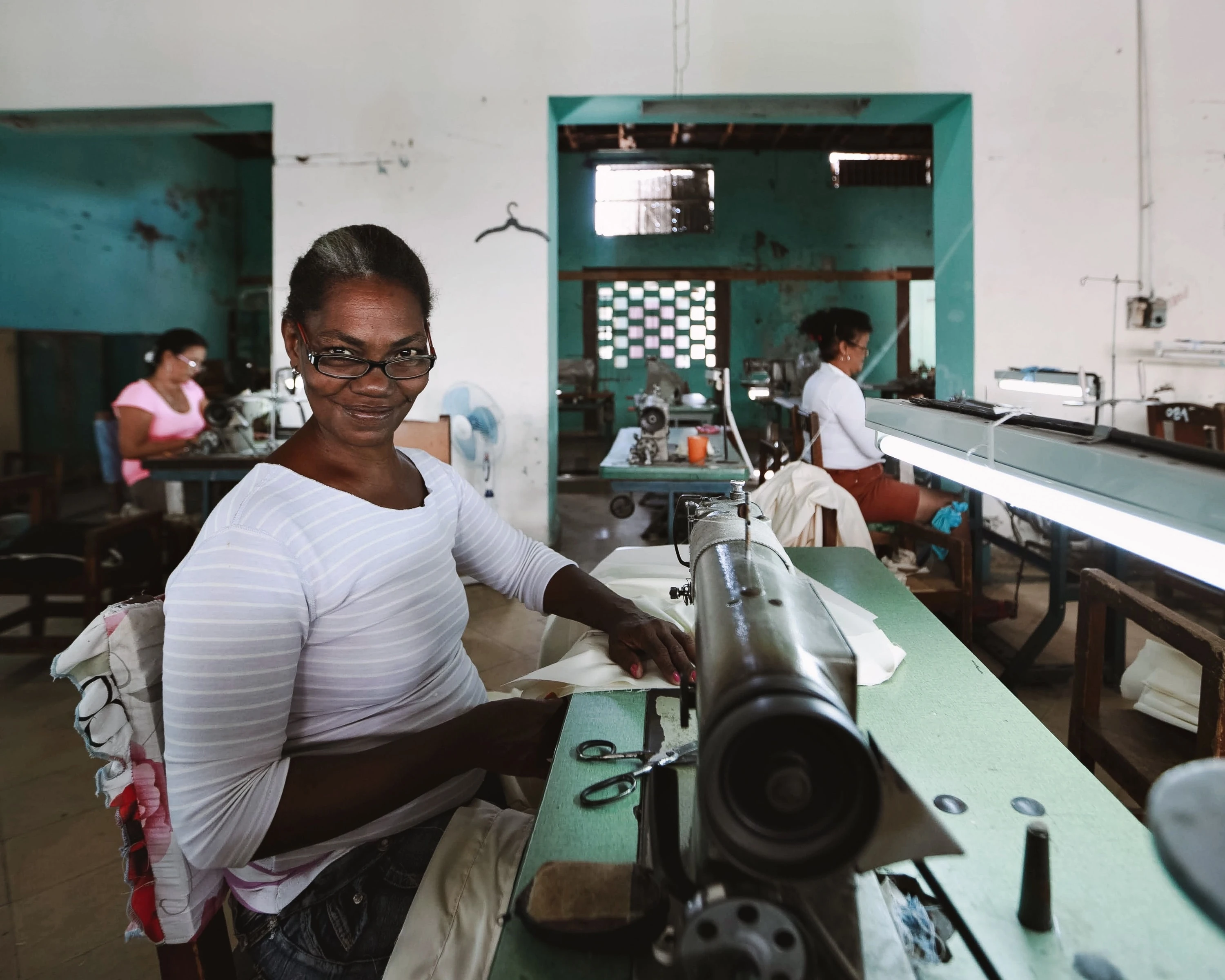
COVID-19 Impact on Women Garment Workers: High-Frequency Phone Survey
Overview
For the World Bank, Zerihun Associates conducted high-frequency phone surveys on a panel of women garment factory workers in Ethiopia's largest industrial park, in the city of Hawassa, to document how their lives were changing during the COVID-19 crisis. The survey was an add-on to the Hawassa Industrial Park Community Impact Evaluation (HIPCIE), with terms of reference from the World Bank's Development Impact Evaluation (DIME) research team.
Objectives
The outcomes under study included socioeconomic status, employment, mental and physical health, health behaviours, empowerment, trust and economic preferences. The study investigated the economic impacts of the COVID-19 crisis on this sample of women, and the interaction between health behaviours, trust in government and economic preferences. The terms of reference also listed migration, information and beliefs, social networks, marriage and fertility choices, and aspirations among the outcomes to measure.
Approach
A representative sample of 5,000 workers was selected from an administrative database of all workers in Hawassa Industrial Park before data collection began. Respondents were then interviewed every two weeks for six months.
The survey was designed as 13 rounds of computer-assisted telephone interviewing (CATI) in SurveyCTO on Android tablets, with interviews averaging 20 to 30 minutes. A single instrument combined an enrolment module (first round only), a bi-weekly core, and rotating modules, with five of nine modules randomly assigned in each round. The design also assigned enumerators by local-language fluency, used verbal consent, and gave respondents airtime at the end of each interview.
Quality assurance
The quality plan provided for audio recording of 25% of calls, an independent external audit through call-backs, daily uploads, weekly progress reports, supervisor observation of each enumerator at least twice, 25% back-checks within a week, and enumerator-check and back-check analysis code run by the research team, with corrective action and re-calls as needed. Interviews were to be private and confidential, on password-protected devices with secure storage, and Zerihun Associates was to submit a security risk assessment and contingency plan.
Scale and coverage
- A representative panel of 5,000 workers drawn from the park's administrative database of all workers
- Interviews every two weeks over six months, designed as 13 rounds
- Hawassa Industrial Park, in the city of Hawassa
Deliverables
The agreed deliverables were the baseline round, supported by radio promotions and posters; rounds 2 to 7; rounds 8 to 13; and a final dataset with a field report.
Results and use
The study's ultimate aim was to inform the government's response and development partners' programming by rapidly reporting key areas of vulnerability and their predictors. It was also designed to guide the Government of Ethiopia and the World Bank on worker protection and recovery in the garment sector during COVID-19, and to inform the broader HIPCIE impact evaluation.
Project Details
- Client
- The World Bank
- Location
- Hawassa, SNNP, Ethiopia
- Period
- Apr 2020 – Feb 2021
- Status
- Completed