
IOM Community Conversation Programme: Impact Evaluation
Overview
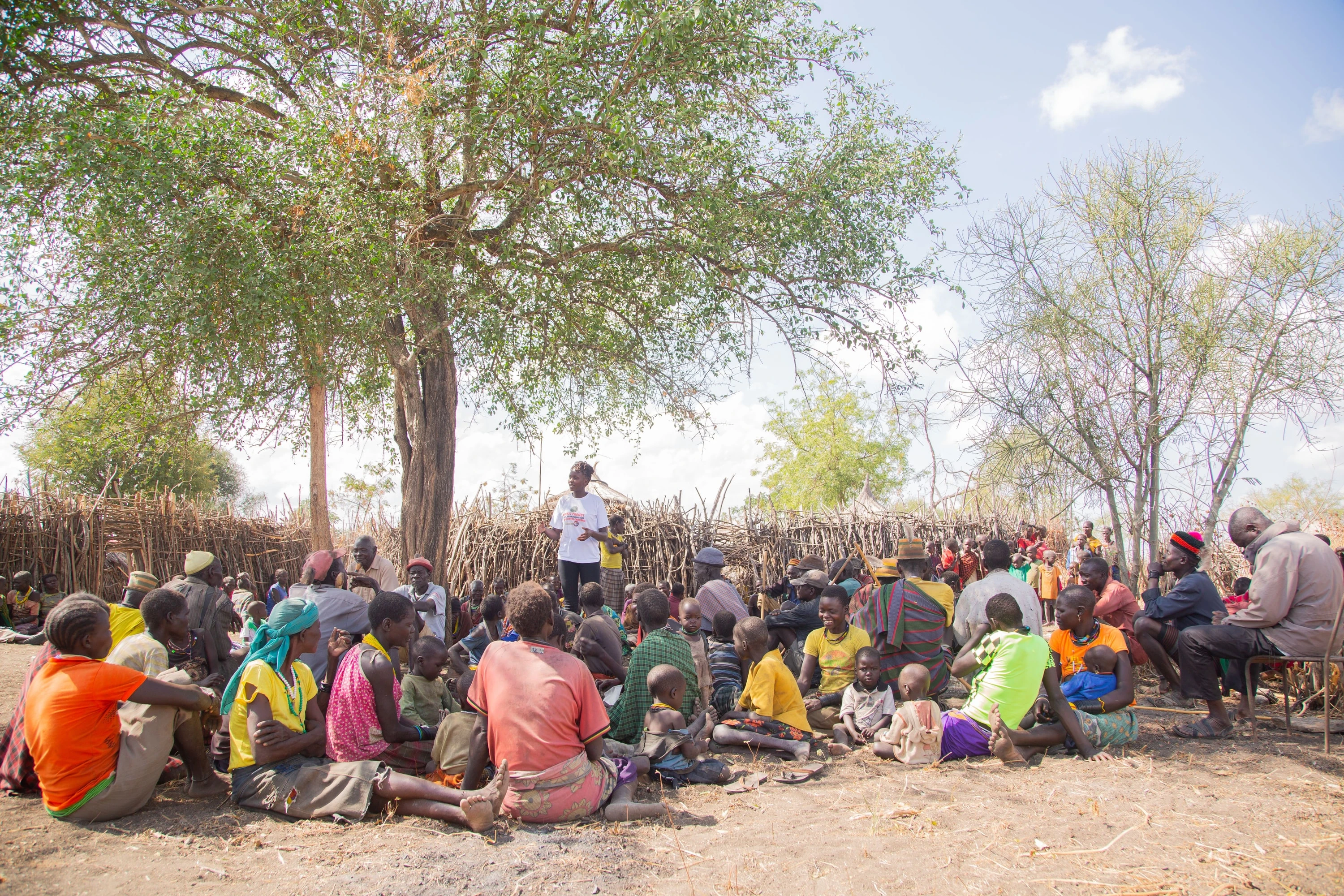
The International Organization for Migration (IOM) and the Government of Ethiopia launched the national Community Conversation Programme (CCP), a forum where community members sit together with other stakeholders to share information on irregular migration, share responsibility for preventing it, and support homegrown solutions and alternatives. IOM's impact evaluation of the programme aimed to collect rigorous evidence on its impact on migration decisions by vulnerable community members in Ethiopia.
IOM contracted Zerihun Associates to collect the evaluation's primary data in 170 selected clusters in Oromia and SNNP. The data covered kebele-level and individual-level outcomes in kebeles where the programme was implemented (intervention kebeles) and in kebeles where it was not (control kebeles).
Objectives
The study aimed to evaluate the impact of the CCP on the migration decisions of vulnerable community members, providing evidence for its effectiveness. The household survey was designed to cover socio-demographics, economic status, civic participation and trust, knowledge of the CCP, and perceptions and drivers of migration.
Approach
Quantitative methods were the main data collection approach, with intervention and control clusters both randomly selected. In each cluster, Zerihun Associates:
- conducted a census (listing) of all households
- carried out 25 household interviews, including a randomly selected adult member of each household
- in clusters where the CCP took place, interviewed one CCP informant, a programme facilitator trained by the CCP, and photographed the minute books of town hall gatherings, entering the date, number of participants and topics covered into a spreadsheet
- held a kebele-level community interview with local leaders and officials, such as kebele chairpersons or administrators, health and agricultural extension workers, development agents, and women and children's affairs officers
Zerihun Associates programmed the three questionnaires for computer-assisted personal interviewing (CAPI) in SurveyCTO, tested them on different devices and ran mock sessions. A pre-pilot of all questionnaires was followed by a field pilot, run by enumerators and supervisors in their regions of assignment in two intervention clusters already sampled for the survey.
Fieldwork faced several challenges. Some clusters first identified as intervention clusters turned out to be control clusters, and the reverse. Security problems in Oromia forced evacuation from, or restricted travel to, some clusters, which were replaced with comparable alternatives. Where false rumours in the Hadiya and Kembata zones made communities suspicious of enumerators, local administrators and trained militia accompanied the teams, and enumerators used standardised interview scripts to explain the study.
Quality assurance
The data quality team ran daily high-frequency checks to flag inconsistencies, outliers and data entry errors, audio audits on key sections (about 10% of questions), phone call-backs on 10% of all interviews as back-checks, and location checks to verify that interviews were completed within the defined enumeration areas. The service agreement also required oral consent recorded in a consent log, COVID-19 precautions, weekly raw data submissions, and compliance with IOM's Data Protection Principles.
Scale and coverage
- A contract covering 170 selected clusters in Oromia and SNNP
- 25 household interviews per cluster
- One CCP informant interview in each intervention cluster and one community interview in each cluster
- Field team of 11 supervisors and 55 enumerators, with 5 data quality auditors and a GIS expert
Deliverables
Zerihun Associates delivered comprehensive data collection reports with detailed datasets for the impact evaluation. The agreed deliverables were a revised survey implementation plan, reviewed and translated instruments, and a full fieldwork implementation report with complete datasets and the required field materials, such as photographs.
Results and use
The data provided evidence on the impact of the CCP on migration decisions. The evidence was intended to show the CCP's effectiveness and to guide programming on irregular-migration risk mitigation and community engagement.
Project Details
- Client
- International Organization for Migration (IOM)
- Location
- Oromia & SNNP, Ethiopia
- Period
- Aug 2021 – Sep 2022
- Status
- Completed